News and Events

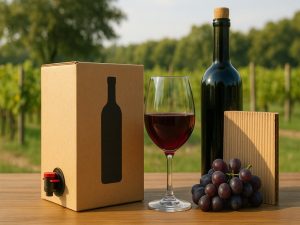
Bag-in-Box Packaging Protects Wine Aroma

Wine Quality Preservation: How Bag-in-Box Packaging Protects Aroma, Flavor & Color

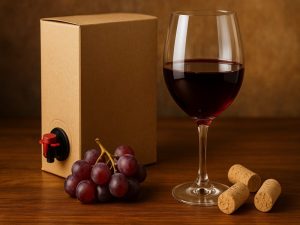
For centuries, wine has been synonymous with glass bottles and corks. Yet, as both environmental awareness and consumer expectations evolve, winemakers are rethinking packaging beyond tradition. Modern consumers want sustainability without compromising taste—and that’s where Bag-in-Box (BIB) wine packaging emerges as a breakthrough. Once seen as merely convenient or budget-friendly, Bag-in-Box technology has become a serious contender in premium wine preservation. By controlling oxygen exposure and shielding wine from light, it extends freshness, aroma, flavor, and color far beyond the limits of traditional bottles. The Science of Wine Deterioration Wine is a delicate, living product. Its taste and appearance are shaped by complex chemical compounds—esters, anthocyanins, phenols, and acids—that react to environmental conditions. The enemies of wine preservation include: Oxygen exposure, which causes oxidation and spoilage. Light, especially UV radiation, triggers photo-oxidation and color loss. Temperature fluctuations, accelerating aging, and degradation. Microbial growth, leading to unwanted odors or haze. In traditional bottles, even the best closures allow trace amounts of oxygen ingress over time. Once opened, oxidation occurs quickly, dulling aroma and turning vibrant reds or whites into flat, brownish liquids. Maintaining wine quality, therefore depends on controlling exposure—and that’s exactly what Bag-in-Box systems are designed to achieve. Oxygen: The Main Enemy of Aroma and Flavor Oxygen is essential in winemaking but disastrous in storage. Controlled oxygen contact during fermentation adds complexity; uncontrolled exposure afterward destroys it. When oxygen reacts with phenolic compounds, it breaks down fruity esters and develops aldehydes, leading to flat, sherry-like off-flavors. Red wines lose color and brightness, while whites darken prematurely. Bag-in-Box packaging addresses this challenge with multilayer barrier films that restrict oxygen ingress to an extremely low level. Combined with a one-way dispensing tap, it ensures air never flows back into the bag after pouring—unlike bottles, where each opening introduces new oxygen. Oxygen Ingress Rates by Packaging Type Packaging Oxygen Transmission Rate (OTR) Shelf Life After Opening Typical Use Case Glass Bottle (Cork) Moderate (through cork pores) 1–3 days Traditional retail Screw Cap Low 5–7 days Premium still wines Bag-in-Box (3 L) Very Low (barrier film sealed tap) 4–6 weeks Everyday & sustainable wines BIB packaging for wine can maintain low oxygen levels not just after opening but throughout the entire shelf life—making it ideal for both home use and on-premise service. How Bag-in-Box Technology Protects Wine Integrity The Bag-in-Box design is deceptively simple but technologically advanced. It includes: An inner flexible bag made from multi-layer plastic film, typically combining polyethylene (PE), ethylene-vinyl alcohol (EVOH), and sometimes metallized PET. An outer cardboard box, which provides structure, insulation, and protection from light. A dispensing tap, which ensures airtight, drip-free pouring. Each component plays a key role. The EVOH barrier prevents oxygen transmission, while the metallized layer reflects UV and visible light that could degrade pigments and flavors. As wine is dispensed, the bag collapses inward—preventing any air pocket from forming. This vacuum effect virtually eliminates headspace, halting oxidation and preserving the wine’s chemical balance. Aroma Preservation: Keeping the Bouquet Intact The pleasure of wine begins
Read More »
Eco-Friendly Wine Packaging

Eco-Friendly Wine Packaging: How Bag-in-Box Reduces Carbon Footprint

As sustainability becomes a global priority, the wine industry faces increasing pressure to reduce its environmental footprint. Traditional glass bottles, while iconic, carry a high carbon cost due to their weight, production energy, and transport inefficiency. From manufacturing emissions to post-consumer waste, the glass bottle’s impact stretches across the entire value chain. To meet growing eco-conscious demands, wineries are embracing innovative packaging alternatives. Among them, the Bag-in-Box (BIB) system stands out as a low-carbon, resource-efficient solution that preserves wine quality while significantly cutting greenhouse gas emissions. Understanding Carbon Footprint in Wine Packaging A product’s carbon footprint represents the total greenhouse gases emitted throughout its life — from raw material extraction to manufacturing, transportation, and disposal. In the context of wine, packaging often accounts for more than 40% of total emissions. Glass bottles are heavy, energy-intensive to produce, and inefficient to transport. By contrast, Bag-in-Box packaging uses lightweight materials and consumes far less energy during production, resulting in a substantial reduction in CO₂ emissions. Lifecycle Carbon Emissions (Glass Bottle vs Bag-in-Box) Packaging Type Material Weight CO₂ Emissions/kg Transport Energy Use Recyclability Rate Glass Bottle ~500 g 1.2–1.5 kg CO₂ High ~60% Bag-in-Box (3 L) ~50 g 0.08–0.12 kg CO₂ Low 85–90% (with separation) These differences translate to up to 80% lower emissions per liter of wine when using Bag-in-Box instead of traditional glass. Lightweight Design: Reducing Emissions from Transport Transportation plays a major role in the carbon intensity of wine packaging. Glass bottles add substantial shipping weight — increasing fuel use and emissions. A 3-liter Bag-in-Box package holds the equivalent of four standard 750 ml bottles, yet weighs 85% less. This lightweight design enables wineries and distributors to ship more product per load, slashing freight emissions and costs. Shipping Efficiency Comparison Packaging Volume Shipped Weight Reduction CO₂ Savings per Pallet Glass Bottles (750 ml × 1000) 750 L — — BIB (3 L × 250) 750 L Up to 85% lighter ~50% less CO₂ When scaled across global supply chains, the transport efficiency of Bag-in-Box wine dramatically reduces overall environmental impact — especially for exports. Material Efficiency: Less Waste, More Recyclability The Bag-in-Box system consists of two main components: An outer cardboard box, made largely from recycled paper. An inner flexible bag (usually multilayer polyethylene and EVOH) that maintains wine freshness. The cardboard is fully recyclable, while the bag’s thin film design uses minimal plastic — around 12–15 g per liter of wine, far less than a PET or glass equivalent. Emerging programs in Europe and North America are improving bag recycling through drop-off schemes and mono-material designs. Some suppliers are already introducing compostable liners and bio-based plastics derived from sugarcane or corn, further enhancing the sustainability of the BIB system. Extended Shelf Life and Reduced Wine Waste Food and beverage waste is another overlooked contributor to global carbon emissions. Once a glass bottle is opened, wine oxidizes quickly and often spoils within days. This leads to unnecessary waste — and wasted energy invested in its production. The Bag-in-Box format prevents

Read More »
Gravity, Piston, and Peristaltic Filling Machines

How Cheertainer Works with Gravity, Piston, and Peristaltic Filling Machines

Cheertainer’s bag-in-box system has become a reliable packaging solution for liquids across the food, chemical, and cosmetic industries. Its flexible, cubic design ensures smooth filling and dispensing, minimizing residue and product waste. One of the key reasons behind its popularity is its compatibility with a wide range of filling equipment—from basic gravity fillers to advanced peristaltic and piston systems. This article explores in depth how Cheertainer integrates with gravity, piston, and peristaltic filling machines, highlighting the engineering principles, operational benefits, and practical considerations that make it suitable for manual, semi-automatic, and fully automated production lines. Understanding Cheertainer Bag-in-Box Design At the heart of Cheertainer’s versatility is its unique cube-shaped flexible inner bag housed inside a protective outer carton. This geometry allows the bag to expand uniformly during filling and collapse evenly during dispensing. Each component—film, spout, and carton—is engineered for performance and ease of use. Key design features include: Corner fitment: Enables complete product evacuation and stable filling orientation. Anti-residue geometry: Reduces liquid retention, particularly useful for viscous materials. Collapsible structure: Eliminates air pockets and oxidation risks during filling. Film flexibility: Accommodates both pressure-based and suction-based filling systems. Feature Benefit for Filling Lines Machine Compatibility Corner fitment Smooth, controlled product flow Gravity, Piston Flexible film Prevents backflow during suction Peristaltic Cubic shape Stable positioning on conveyors Automated lines These structural features make Cheertainer adaptable to multiple filling mechanisms, ensuring accurate dosing, hygienic operations, and consistent performance. Gravity Filling Machines and Cheertainer How Gravity Filling Works A gravity filler operates on a simple principle: the liquid flows downward under its own weight into the container. It is ideal for low-viscosity liquids such as water, juice, vinegar, and detergents. The absence of mechanical pressure means gentle filling, reduced foaming, and minimal equipment complexity. Cheertainer’s Compatibility with Gravity Fillers Cheertainer bags complement gravity systems exceptionally well. Their cubic shape allows stable placement under fill nozzles, while the corner-mounted spout design minimizes splashing and turbulence. The vented structure ensures a smooth, continuous flow without glugging or airlocks. The flexible film also expands evenly, reducing stress points that could occur during free-flow filling. This translates to consistent fill levels and low product waste, even when filling high-speed lines with multiple heads. Typical Applications Food and beverage industries (juices, sauces, edible oils) Home care and cleaning products Low-viscosity industrial fluids Parameter Gravity Filler + Cheertainer Result Filling speed Moderate, stable flow Product waste < 1% Foaming risk Low due to vented spout Suitable viscosity 1–100 cP Line setup Easy for manual or semi-automatic operations Gravity fillers combined with Cheertainer packaging offer a balance of simplicity, hygiene, and operational reliability—ideal for smaller producers or entry-level automation. Piston Filling Machines and Cheertainer Principle of Piston Filling Piston filling machines use a controlled cylinder-and-piston motion to draw liquid from a hopper and dispense it through a nozzle. This positive-displacement method provides high volumetric accuracy, making it suitable for medium-viscosity liquids such as condiments, oils, creams, and lubricants. Why Cheertainer Fits Perfectly Cheertainer’s construction handles piston pressure without deformation or

Read More »
Cheertainer Bag Geometry for Syrups and Sauces

How the Cheertainer Bag Geometry Reduces Product Residue in Syrups and Sauces

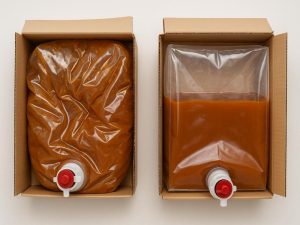
Viscous products like syrups, sauces, fruit concentrates, caramel, and dressings have one shared challenge — they don’t like to leave the package. Their sticky, high-viscosity nature means that conventional bag-in-box liners often trap measurable residue in folds and corners. Each drop that clings to the liner becomes waste, increasing cost, cleaning labor, and environmental impact. The Cheertainer Bag-in-Box system solves this long-standing problem through a design innovation that’s often overlooked: geometry. By using a form-fit, box-shaped liner rather than a loose pillow, the Cheertainer bag eliminates dead zones, stabilizes flow, and ensures nearly complete evacuation of thick products. This article explains, in both engineering and practical terms, how geometry alone can drastically reduce residue in syrups and sauces. Why Residue Happens in Viscous Liquids To understand how geometry matters, we first need to look at how viscous materials behave. The viscosity of most syrups and sauces varies under stress because they are non-Newtonian fluids. Two properties dominate: Rheological Property Effect on Flow Residue Impact Yield Stress Fluid will not flow until a minimum pressure or shear is applied Material remains static in folds or corners Shear-Thinning Viscosity decreases with movement Flow stops quickly once pressure drops, leaving streaks Thixotropy Viscosity rebuilds over time at rest Fluid “sets” if not continuously agitated Surface Adhesion High wetting tendency on plastic film Syrups cling strongly to the bag walls In simple terms, every uneven surface, crease, or air pocket creates a zone of low shear. That’s where syrup gets stuck — and that’s where the Cheertainer’s geometry makes all the difference. From Pillow to Form-Fit: A Shift in Design Philosophy Traditional bag-in-box liners resemble balloons. When filled, they bulge against the box, forming unpredictable folds. When emptied, they collapse irregularly, trapping thick product inside corners. The Cheertainer Bag replaces that guesswork with a form-fit design that matches the box’s interior dimensions. The result is a liner that behaves like a structural component rather than a flexible sack. Feature Pillow Liner Cheertainer Form-Fit Liner Shape during fill Round or irregular Square, box-conforming Collapse pattern Random folds Controlled, predictable Corner formation Gaps and voids True box corners Air retention High Minimal Residue level Higher (uneven drain) Significantly reduced Each panel of the Cheertainer bag is pre-creased to collapse inward as the liquid drains. The outlet is strategically aligned with the natural low point, ensuring every milliliter of product flows toward the fitment. How Geometry Controls Flow A. Flat Panels Create Drainage Lanes The Cheertainer bag features flat vertical and bottom panels that guide liquid flow along consistent channels. During emptying, these flat walls act like built-in gutters, minimizing turbulence and directing viscous fluids smoothly to the outlet. Traditional pillow liners, in contrast, generate S-shaped folds that trap fluid in stagnant zones. B. Corner and Crease Control Each corner seam of the Cheertainer bag is designed to fold inward, not outward. This geometry behaves like a squeegee: as the walls collapse, the corners push remaining product toward the center. This reduces the “corner puddles” that typically

Read More »

Rigid Vs. Semi-Rigid Packaging: A Comprehensive Comparison

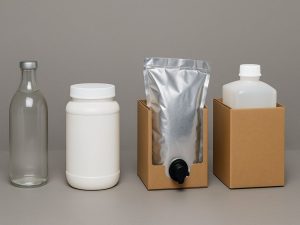
Packaging offers many options, with rigid and semi-rigid being the most popular. Each has its advantages based on the product, transportation needs, and cost-efficiency. This article explores the differences between these packaging types, focusing on solutions like bag-in-box, cheertainer, and cubtainer, helping companies choose the best option. What is Rigid Packaging? Rigid packaging refers to packaging that retains its shape and structure under typical conditions. Its ability to withstand deformation guarantees the safety of its contents. Rigid packaging can include materials like glass, metal, and certain plastics. Common examples include glass bottles, plastic containers, aluminum cans, and steel tins. Benefits of Sturdy Packaging Durability: The contents are highly protected by rigid packing. The solid structure prevents crushing and maintains the shape of the packaging, which is essential for products that need to be handled roughly or stored for extended periods. Premium Appearance: Rigid packaging often provides a more premium appearance, making it a popular choice for luxury products like perfumes, high-end beverages, and cosmetics. The package conveys an impression of luxury and elegance due to its substantial weight. Shelf Appeal: The stability and sturdiness of rigid packaging ensure that products stand out on shelves, enhancing visibility and making them more likely to catch the consumer’s eye. Rigid packaging also supports better stacking and display. Long Shelf Life: Certain types of rigid packaging, especially those made from glass or metal, help to preserve the product’s shelf life by creating a hermetically sealed environment that protects against contamination. Disadvantages of Rigid Packaging Higher Costs: The production and material costs for rigid packaging tend to be higher. The manufacturing process for items like glass and metal containers can be energy-intensive, and the cost of materials can add up quickly. Larger Carbon Footprint: Due to the use of heavier materials like glass and metal, rigid packaging often has a higher environmental impact. These materials are not only energy-intensive to produce but also take up more space during transportation, increasing their carbon footprint. Breakability: While rigid packaging is highly protective, it is often more prone to breakage, especially glass packaging. This can lead to product waste and additional packaging costs for protective inserts. What is Semi-Rigid Packaging? Conversely, semi-rigid packaging blends the best features of flexible and rigid packaging. While it is not as solid as rigid packaging, it retains some structural integrity and does not collapse completely. Semi-rigid packaging materials include molded plastics, certain types of cardboard, and flexible materials that are reinforced or structured to hold their shape when filled. Advantages of Semi-Rigid Packaging Lightweight: One of the key advantages of semi-rigid packaging is its lightweight nature. This makes it more cost-effective for transportation, reducing shipping expenses and the overall environmental footprint. Cost-effective: Compared to rigid packaging, semi-rigid packaging is typically less expensive to create. The manufacturing processes are more flexible and less resource-intensive, which helps keep costs down for producers. Flexibility in Design: Semi-rigid materials often offer more flexibility in terms of design and shape, making them ideal for packaging products that

Read More »
Install and Replace a Bag in BoxTap

How To Properly Install And Replace A Bag-in-Box Tap

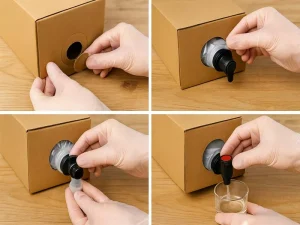
Bag-in-Box (BiB) packaging has become one of the most reliable solutions for dispensing beverages like wine, juice, syrups, tea, and even cold brew coffee. At the heart of its convenience is the tap—a small but critical component that ensures beverages flow smoothly while maintaining freshness and preventing contamination. Whether you’re a homeowner using BiB for family gatherings, a restaurateur running high-volume soda dispensers, or a winery managing customer packaging, knowing how to properly install and replace a Bag-in-Box tap is essential. This guide walks through everything you need to know: tap types, installation steps, replacement procedures, troubleshooting tips, and best practices for handling. Why the Bag-in-Box Tap Matters The tap may look like a simple plastic spigot, but it plays a vital role: Freshness Protection – The tap prevents oxygen from entering the bag, minimizing oxidation and keeping drinks flavorful for weeks. Controlled Dispensing – A properly fitted tap avoids drips, leaks, or splashes, ensuring neat self-service. Food Safety – High-quality taps are tamper-evident and designed to keep beverages safe from contaminants. User Convenience – Guests, staff, or family members can easily pour drinks without special tools. A poorly installed or damaged tap, however, can lead to wasted product, leaks, or unsafe consumption. That’s why careful installation and timely replacement are so important. Types of Bag-in-Box Taps Before we jump into installation, let’s understand the most common tap styles: Vitop Tap (Push-Button Style) Widely used in wines, juices, and premium beverages. Features a push-button or quarter-turn spout. Known for leak-proof performance and ease of use. Butterfly-Type or Flip-Type Tap Flips upward or downward to allow opening and closing. Often used for syrups or concentrates in foodservice. Screw-Cap Fitment + Tap Adapter Some BiBs use a screw-cap fitment that requires an external adapter. Common in soda syrup boxes for restaurants. Pull-Ring Taps Less common today, but still used in some bulk juice applications. Requires pulling a small ring or lever to dispense. While installation steps are similar across types, knowing your specific tap ensures the best results. Tools & Preparation You don’t need heavy equipment, but having the right setup makes the job smoother. Tools and materials: Clean, dry hands (or food-grade gloves in professional settings) Scissors or box cutter (to open carton perforation) Clean towel or tray (to catch any first drips) Replacement tap (if changing out an old one) Preparation steps: Place the Bag-in-Box on a stable, flat surface. Identify the perforated cut-out on the carton (usually marked). Confirm beverage type and expiration date before installation. If replacing a tap, make sure the replacement matches the fitment style. Step-by-Step: Installing a Bag-in-Box Tap Step 1: Expose the Fitment Locate the perforated panel on the outer carton. Push in or cut neatly around the panel to reveal the bag’s fitment (usually capped). Be careful not to cut the bag itself. Step 2: Remove Protective Cap Most BiB bags are sealed with a tamper-evident cap. Grip firmly and twist counterclockwise to remove. Keep a towel handy in case of a small

Read More »
Bag In Box Filling Machine For Sale

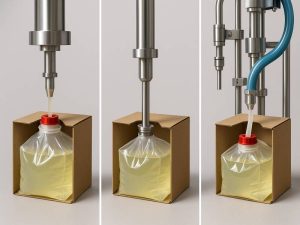
Bag-in-Box Filling Machines for Liquids: Wine, Juice, Oil, And More

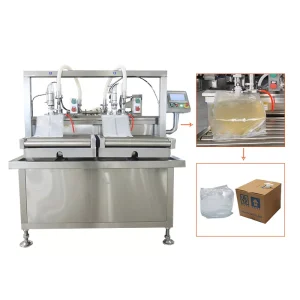
As demand grows for sustainable and efficient liquid packaging, Bag-in-Box (BIB) systems have become a leading solution across industries. From wine to detergents, BIB machines offer precise, low-waste packaging for food and non-food liquids. Bag-in-Box Packaging: What Is It? Bag-in-Box packaging consists of a flexible inner bag (made from multi-layer films for barrier protection) and a rigid or semi-rigid outer box (typically corrugated cardboard). The liquid is dispensed via an attached valve or tap. BIB systems are known for: Lightweight design Low oxygen permeability Excellent product protection Extended shelf life (even after opening) Industries favor this packaging not only for its functionality but also for its lower environmental footprint compared to glass or rigid plastic containers. How Do Bag-in-Box Filling Machines Work? BIB filling machines automate the process of filling and sealing flexible liquid pouches inside protective boxes. While designs vary by industry and speed, most machines perform the following steps: Bag Feeding: Pre-made bags are loaded manually or automatically. Cap Removal: The machine automatically removes the cap from the spout. Vacuuming (optional): Some machines remove air or pre-flush with inert gas (like nitrogen or CO₂) to preserve product integrity. Filling: The machine fills the bag with the desired volume, typically using a flow meter or load cell for precision. Cap Re-insertion or Crimping: The spout is securely re-sealed. Box Insertion (optional): Some systems place the filled bag into the box, seal the flaps, and label the final package. BIB fillers can be: Manual Semi-automatic Fully automatic Depending on output needs and integration with existing production lines. Benefits of Using BIB Filling Machines A. Maintaining the Quality of the Product Liquids like wine and juice deteriorate when exposed to oxygen and light, which the BIB system minimizes. Inert gas flushing, vacuum sealing, and airtight caps help preserve freshness and flavor even after opening. B. Improved Efficiency and Cleanliness Automated filling machines minimize product spillage, reduce human error, and ensure hygienic handling, especially important for food-grade products like milk or oil. C. Cost Savings in Packaging and Shipping Lower material cost compared to bottles or cans Lighter weight means lower shipping costs Cube-efficient design for optimal storage D. Sustainability BIBs use up to 70% less plastic than rigid containers and are more easily recyclable. They also reduce carbon footprint during transportation due to their space efficiency. E. Customizable for Various Liquids Whether thick or thin, acidic or neutral, sterile or non-sterile, BIB machines can be tailored to accommodate different viscosities and temperature requirements. Industries and Liquids Best Suited for BIB Filling Industry Liquid Products Why BIB Works Well Beverage Wine, Juice, Syrups, Cold Brew, Tea Preserves taste, minimizes oxidation Food Cooking Oil, Vinegar, Sauces, Dairy Hygienic, portion-controlled dispensing Chemical Detergents, Cleaners, Solvents Safer handling and reduced spillage Pharmaceutical Nutraceuticals, Liquid Vitamins, Antiseptics Precise dosing, clean packaging Agricultural Fertilizers, Pesticides, Animal Health Products Leak-proof, weather-resistant storage Types of Bag-in-Box Filling Machines A. Manual BIB Fillers Operated by hand Low cost and compact Ideal for startups or small batches B. Semi-Automatic Fillers Automated

Read More »
Cap and Spout Fitments

Understanding Bag-in-Box Fitment: A Comprehensive Guide

Bag-in-Box (BIB) packaging is a convenient solution for storing and dispensing liquids, commonly used in industries like food, chemicals, and pharmaceuticals. It protects contents, reduces waste, and extends shelf life, with the fitment playing a key role in dispensing. This article covers Bag-in-Box fitments, their types, materials, and impact on performance and usability. What is a Bag-in-Box Fitment? The fitment is the interface between the bag and the outside world, typically located at the bottom of the Bag-in-Box system. It is essential to ensuring that the substance is delivered effectively and without spilling or contamination. Fitments are commonly made from food-grade plastic, and they can vary in design based on the product’s needs, the type of dispenser, and the level of control required over the flow of the liquid. Importance of Fitment in Bag-in-Box Systems The fitment is much more than just a valve or spout. It enhances the Bag-in-Box system’s overall functionality and user experience. Here are several key factors where fitments play an essential role: Leak Prevention: A well-designed fitment prevents leaks, even if the bag is pressurized or stored in different orientations. Preservation: Fitments are designed to protect the contents from air exposure, which is crucial for maintaining freshness, particularly in perishable products like wine or juice. Compatibility with Dispensers: Fitments must be compatible with a wide range of dispensers, from manual taps to automated systems. Ease of Use: Fitments make it easy for users to control the flow of the product, ensuring they can dispense just the right amount with minimal effort. Types of Bag-in-Box Fitments Fitments come in various shapes, sizes, and functionalities to suit different products and applications. Let’s take a look at some of the most common types of fitments: Tap Fitments Tap fitments are among the most popular types of fitments in the Bag-in-Box world. They are typically used for beverages like wine, juice, and syrup. Tap fitments allow for precise control over the flow of the liquid and can be opened and closed with ease. These taps are designed to prevent spills and leaks, even when the bag is stored horizontally. Push Button Taps: These taps are easy to operate with a simple push of a button, making them ideal for home use or self-service stations. Lever Taps: Lever taps offer a higher level of control over the flow and are often used in commercial settings where precise dispensing is required. Cap and Spout Fitments Cap and spout fitments are typically used for products like cooking oils, detergents, and chemicals. They are often paired with a pump or squeeze mechanism for controlled dispensing. These fitments are designed to provide an airtight seal, ensuring the product remains uncontaminated even after multiple uses. Quick Connect/Disconnect Fitments Quick connect/disconnect fitments are commonly used in industries where the Bag-in-Box system is attached to automated dispensing systems, such as in restaurants or cafeterias. These fitments allow the bag to be quickly connected or disconnected from the system without any spillage, making it easy to replace used

Read More »
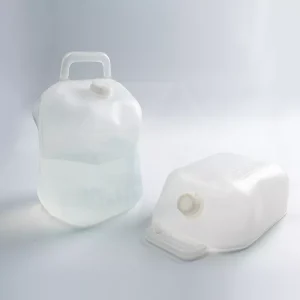
5.3 Gallon Semi Foldable Jerry Can

UN-Certified Jerry Cans: What Makes Them Suitable for Dangerous Goods?

Transporting hazardous materials like chemicals or fuels requires strict safety compliance, and UN-certified jerry cans are a trusted solution. Their durable design, specialized materials, and global certification offer essential protection during transit. This article explores what makes a jerry can UN-certified and why it’s ideal for handling dangerous goods. Understanding UN Certification UN-certified semi-collapsible jerry cans meet regulations established by the United Nations Committee of Experts on the Transport of Dangerous Goods. These standards are adopted globally and integrated into regional regulations, such as: The international road transportation of hazardous materials is covered by the European Dispute Resolution (ADR) process. International Maritime Dangerous Goods Code, or IMDGs Title 49 of the Code of Federal Regulations (CFR) of the United States The International Air Transport Association’s (IATA) laws governing dangerous goods UN-certified containers, including jerry cans, undergo rigorous testing and evaluation before they are approved for use in transporting hazardous goods across borders, modes of transport, and industries. What Makes a Jerry Can “UN-Certified”? A jerry can becomes UN-certified only when it passes a series of stringent design and performance tests that simulate real-world handling, accidents, and environmental stress. Key components of the certification process include: 1. Material and Structural Requirements UN-certified jerry cans are made from high-grade materials that resist chemical degradation and physical deformation. The most common ones are: High-density polyethylene, or HDPE, is well known for its remarkable chemical resistance and hardness. Steel: Used for flammable or highly reactive liquids. Composite materials: Sometimes layered with plastic or fiber reinforcements for extra strength. The structure must include stable sidewalls, reinforced corners, and leakproof closures to prevent rupture or spills during impact or pressure changes. 2. Performance Testing To obtain UN certification, jerry cans must pass multiple tests simulating harsh transport conditions: Drop Test: Filled cans are dropped from predetermined heights (often 1.2m or more) onto different surfaces to check for cracking or leakage. Leakproofness Test: Pressure is applied internally to ensure there are no leaks from seams, caps, or closures. Hydrostatic Pressure Test: Containers are pressurized with water for a specified time to assess structural integrity under pressure. Stacking Test: Weight is applied on top of the container for extended periods to simulate storage and transport stacking. Vibration Test: Simulates the shaking during road or sea travel to ensure the container doesn’t degrade or loosen. Internal Pressure Test: Verifies the can’s ability to withstand internal gas build-up without bursting. Only containers that pass all these tests are embossed or labeled with a UN marking code that identifies their specifications and capabilities. Decoding the UN Marking on Semi-Collapsible Jerry Cans Each UN-certified collapsible jerry can bears a permanent UN marking, usually printed or molded into the container. Here’s an example and what each part means: UN 3H1/Y1.9/150/23 USA/M4567 UN: Indicates compliance with UN standards. 3H1: Code for a plastic jerry can without a removable head. Y: Indicates packaging group (Y = II & III; X = I, II, III). 1.9: Maximum specific gravity of the liquid it can safely contain.

Read More »
Cheertainer Improves Warehouse Efficiency and Pallet Optimization

How Cheertainer Improves Warehouse Efficiency and Pallet Optimization

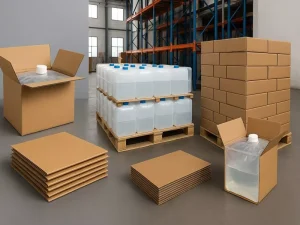
Modern supply chains increasingly rely on intelligent, space-efficient packaging to reduce costs, enhance agility, and meet sustainability targets. One standout innovation in liquid logistics is the Cheertainer bag-in-box system. Offering a combination of form-fitting design, flat-pack efficiency, and superior emptying performance, Cheertainer significantly enhances both warehouse space utilization and pallet optimization. We’ll explore how this packaging marvel transforms operations from the dock to the storage rack. What Is Cheertainer? The Cheertainer is a flexible form-fit bag-in-box (BIB) liner, typically housed inside a thin, protective cardboard box. Available in sizes spanning 4 L to 25 L, the inner bag conforms tightly to fit the box, minimizing dead space and optimizing volume. Offering modular film options—including standard barrier, EVOH, and metalized for freshness—it’s versatile across food, beverage, chemical, cosmetic, and industrial lines. Its compatibility with manual, semi-automatic, and fully automatic filling systems ensures adaptability across diverse production environments. Revolutionizing Freight & Warehouse Space Perhaps the most immediate gain is seen at the point of inbound logistics: Cheertainer liners and boxes ship flat, occupying far less space than rigid or semi-rigid containers. One compelling example saw the shift from rigid bags to flat-packed empty Cheertainer units increase truck capacity from ~3,000 to ~72,000 units—a staggering 24× increase. This drastically reduces freight volume, cuts transportation costs, and simplifies supply coordination. Once on-site, the advantage continues. Flat stacks of Cheertainer liners occupy a fraction of the footprint required by bulkier, pre-assembled containers—freeing up warehouse space for inventory, pallet racking, or repurposing for operational tasks. Inventory management and replenishment are streamlined because fewer pallets and less handling are needed to maintain supply levels. Elevated Pallet Optimization Warehouse efficiency hinges on maximizing each pallet’s fill rate while maintaining stability. Cheertainer’s compact cube-fit design allows for denser pallet stacking, reducing unused void spaces and improving pallet surface coverage. This aligns with best practices in pallet optimization—such as standardized box sizes, interlocking stacking, and smart load planning—to achieve safer, more stable, and cost-efficient pallets. Nearly Perfect Product Evacuation Unlike rigid or pillow-style containers that trap product, Cheertainer’s design enables near-total evacuation (>99%) of the product. The square, corner-sealed bag collapses consistently, preventing liquid retention—even toward the last pour. This reduces waste, improves raw material return on investment, and simplifies disposal (no cleaning needed), cutting labor and environmental impact. Environmental & Cost Advantages Cheertainer packs a serious sustainability punch. Compared to jerrycans and pails, it reduces plastic consumption by 86–92%, offers 10–20 times more packing efficiency, and cuts CO₂ emissions significantly during both production and transport. As a flat-packed, low-plastic solution, it aligns seamlessly with circular economy strategies: the outer box is often recyclable, liners use less material, and transport emissions drop dramatically. Boosting Operational Workflow On the production floor, Cheertainer’s flat-pack staging minimizes clutter. Rather than handling bulky, space-consuming empty containers, workers can keep a neat, compact stack ready for assembly—improving floor space, reducing trip hazards, and encouraging safer line-side environments. Complemented by customizable films and fitments, operations can switch between product types with minimal disruption, supporting lean changeovers and flexibility.

Read More »
Scroll to Top

Leave Your Message

    Leave Your Message