
A flexible inner bag and a stiff outside box are used in bag-in-box (BIB) packaging. It is widely used for liquids and semi-liquids because it protects the product, improves dispensing, and lowers packaging and transport costs. Simple in structure, it offers strong hygiene, convenience, shelf-life performance, and cost-efficiency.
Bag-in-Box Packaging: What Is It?
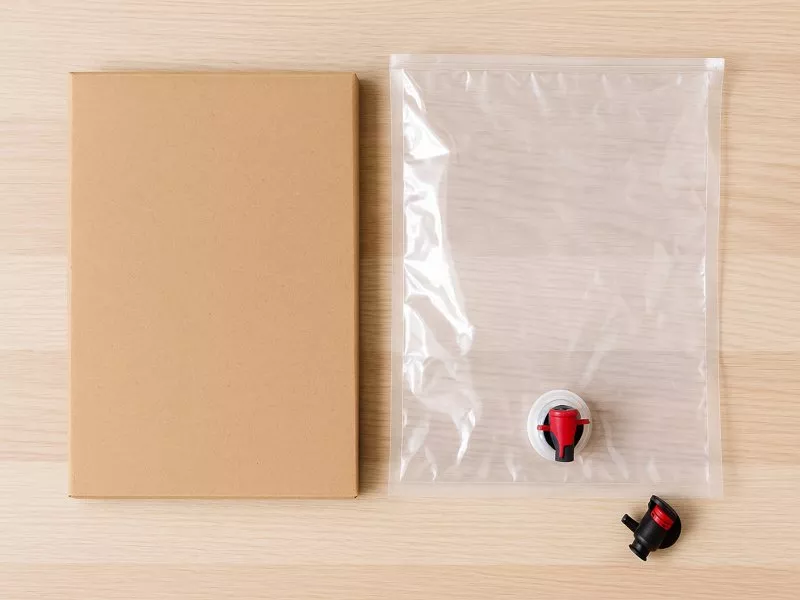
There are two primary components to the bag-in-box packaging:
- An inner flexible bag
- An outer rigid box
The inner bag is usually made from one or more layers of plastic film designed to hold the product safely and preserve its quality. This bag is fitted with a dispensing tap, valve, or connector. The outer box is typically made from corrugated cardboard, which protects the bag during storage, transportation, and use.
Unlike bottles or cans, bag-in-box packaging is designed so that the bag collapses as the product is dispensed. This is one of its key advantages. Because the bag shrinks as liquid leaves it, less air enters the package. That helps reduce oxidation and contamination, which is especially important for products like wine, juice, and food ingredients.
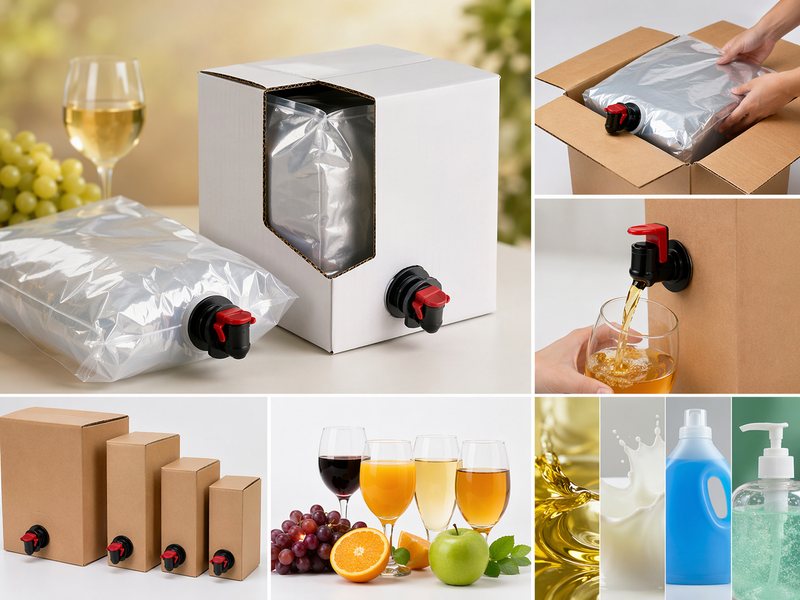
Bag-in-box is used in both consumer packaging and industrial packaging. Small formats may be sold in supermarkets for beverages, while larger formats are common in foodservice, hospitality, and chemical supply chains.
Main Components of a Bag-in-Box Package
To understand how bag-in-box works, it helps to look at each component separately.
| Component | Function | Common Materials |
| Inner bag | Holds the liquid or semi-liquid product | Multi-layer plastic films |
| Fitment/tap/valve | Allows filling and dispensing | Plastic |
| Outer box | Protects the bag and provides structure | Corrugated cardboard or paperboard |
| Barrier layers | Help block oxygen, moisture, or light | EVOH, metallized film, PE, PET |
| Handle/opening area | Makes carrying and pouring easier | Die-cut cardboard design |
1. Inner Bag
The core of the packaging system is the inner bag. It is flexible and usually made from multiple layers of film. These layers may provide:
- Product compatibility
- Strength and puncture resistance
- Oxygen barrier protection
- Moisture resistance
- Sealability
The exact film structure depends on the product inside. For example, wine packaging may prioritize oxygen barrier properties, while industrial chemicals may require stronger chemical resistance.
2. Dispensing Fitment
The bag is usually fitted with a tap, spout, valve, or connector. This component serves two purposes:
- It allows the bag to be filled during production
- It allows the end user to dispense the product easily
For household products, the dispensing system is often a simple tap. For industrial applications, it may be a specialized connector designed to work with machines or pumps.
3. Outer Box
The box protects the flexible bag from external damage. It also makes stacking, shipping, storage, and display much easier. Without the box, the bag would be difficult to handle and more vulnerable to puncture.
The outer box also offers branding space. Product information, printing, instructions, and visual design are usually placed on the box rather than the inner bag.
How Does Bag-in-Box Packaging Work?
The working principle of bag-in-box packaging is based on controlled dispensing from a sealed flexible container.
Here is the basic process:
Step 1: The Bag Is Filled
During manufacturing, the empty bag is produced, fitted with its dispensing component, and then filled with the product using specialized equipment. The filling process may be done under hygienic, aseptic, or standard conditions depending on the product type.
Step 2: Place the Filling Bag inside the Box
After filling, the bag is placed inside the outer box. The dispensing tap or spout is aligned with a pre-cut opening so the user can access it easily.
Step 3: The Product Is Dispensed
When the user opens the tap or valve, the liquid flows out. As the product leaves, the flexible bag collapses inward instead of pulling outside air into the package.
Step 4: The Bag Shrinks as It Empties
This collapsing action is one of the major functional benefits of bag-in-box packaging. It helps preserve the remaining product by minimizing contact with oxygen.
| Stage | What Happens | Benefit |
| Filling | The product is sealed inside the inner bag | Hygienic containment |
| Boxing | The bag is placed inside a rigid carton | Easier handling and transport |
| Dispensing | User opens the tap or valve | Controlled pouring |
| Collapse of the bag | The bag shrinks as the product leaves | Reduced air exposure |
| Final emptying | Most of the product can be dispensed | Less waste |
Why the Collapsing Bag Matters
When a product is opened in several packaging styles, air enters the container. This can shorten shelf life, change taste, reduce freshness, or increase contamination risk. Bag-in-box packaging works differently.
Because the bag collapses as the liquid is dispensed, it reduces the amount of oxygen that reaches the remaining product. This is especially valuable for:
- Wine
- Juice
- Syrups
- Dairy concentrates
- Liquid eggs
- Sauces
- Post-mix beverages
In simple terms, bag-in-box does not just store the product. It actively helps protect it during use.
Common Applications of Bag-in-Box Packaging
Bag-in-box packaging is used in many industries because it can handle a wide range of liquid products.
| Industry | Typical Products |
| Beverage | Wine, juice, water, cocktail mixes, syrup |
| Foodservice | Sauces, edible oil, dairy mixes, soup bases |
| Dairy | Milk concentrates, cream, yogurt base |
| Household chemicals | Detergents, cleaning solutions |
| Industrial | Lubricants, chemicals, additives |
| Healthcare and hygiene | Sanitizers, soaps, liquid solutions |
Beverage Industry
This is one of the most familiar markets for bag-in-box packaging. Boxed wine is a classic example. Juice concentrates and beverage syrups are also commonly packed this way, especially for restaurants and dispensers.
Food Industry
Bag-in-box is popular for large-volume liquid foods because it is efficient, easy to transport, and often easier to dispense than rigid containers. Restaurants and industrial kitchens often use it for sauces, cooking oils, and syrup products.
Non-Food Applications
Bag-in-box is also common in sectors where controlled dispensing and reduced packaging waste matter. Cleaning chemicals, hand soap refills, and industrial liquids are often packed in BIB format.
Advantages of Bag-in-Box Packaging
Bag-in-box packaging has grown in popularity for good reasons. It offers practical benefits across the supply chain.
1. Lower Packaging Weight
Compared with glass bottles, metal cans, or rigid plastic containers, bag-in-box systems often use less material by weight. This can reduce transport costs and make handling easier.
2. Better Space Efficiency
Before filling, empty bags and flat cartons take up much less storage space than rigid containers. Even after filling, the rectangular box shape often makes palletizing and stacking more efficient.
3. Improved Product Protection
Multi-layer bag structures can provide strong barriers against oxygen, moisture, and light, depending on the design. The collapsing bag also helps preserve product quality after opening.
4. Easy Dispensing
Users can pour the substance in a controlled manner thanks to the tap or valve. This reduces spills and improves convenience.
5. Less Product Waste
Because the bag collapses and dispenses efficiently, less product may be left inside compared with some rigid packaging formats.
6. Good Branding Potential
The outer box offers a large printable surface for branding, instructions, regulatory information, and retail presentation.
Limitations of Bag-in-Box Packaging
Although bag-in-box has many strengths, it is not ideal for every product or market.
| Limitation | Explanation |
| Not always premium-looking | Some luxury markets still prefer glass or rigid containers |
| Material complexity | Multi-layer bags can be harder to recycle |
| Puncture risk | The inner bag needs box protection and careful handling |
| Equipment needs | Filling systems may require specialized machinery |
| Product compatibility | Film structure must match the product’s chemical properties |
For example, premium spirits are often still packaged in glass because brand image plays a strong role. In contrast, bulk wine or foodservice syrup may benefit more from BIB efficiency than from rigid premium presentation.
Bag-in-Box vs Traditional Packaging
To understand its value more clearly, it helps to compare bag-in-box with other packaging formats.
| Feature | Bag-in-Box | Glass Bottle | Rigid Plastic Container |
| Weight | Low | High | Medium |
| Transport efficiency | High | Lower | Medium |
| Air exposure after opening | Low | Higher | Higher |
| Breakage risk | Low | High | Low |
| Branding surface | Large box area | Label-based | Label-based |
| Dispensing control | Good | Moderate | Moderate |
| Storage of empty packs | Efficient | Poor | Poor |
This comparison shows why bag-in-box is attractive for bulk liquids and repeat-use products. It performs especially well where logistics, dispensing, and shelf-life management are important.
Types of Bag-in-Box Systems
There is no single universal bag-in-box format. The structure varies depending on volume, product type, filling method, and end use.
By Volume
- Small consumer packs: 1L to 5L
- Foodservice packs: 5L to 20L
- Industrial packs: 20L and above
By Filling Method
- Standard fill
- Hot fill
- Aseptic fill
By Dispensing Method
- Tap
- Spout
- Screw cap
- Specialized connector
By Barrier Requirement
- Standard barrier
- High oxygen barrier
- Light barrier
- Chemical-resistant structure
The package must be designed around the product’s needs. A wine bag-in-box is not built the same way as a detergent bag-in-box.
How Bag-in-Box Supports Sustainability Goals
Bag-in-box packaging is often discussed in sustainability conversations because it can reduce material use and improve transport efficiency. Lighter packaging can mean lower shipping weight. Flat-packed components can reduce warehouse space and inbound logistics volume.Waste can also be decreased with improved product evacuation.
Sustainability, however, is contingent upon the entire packaging design. The outer carton is often recyclable, while the inner bag may be more difficult to recycle if it uses mixed materials. As a result, many packaging manufacturers are working on mono-material and more recyclable film solutions.
So, from a sustainability perspective, bag-in-box is not automatically perfect, but it can offer strong environmental advantages when designed thoughtfully.
What to Consider When Choosing Bag-in-Box Packaging
If a company is evaluating bag-in-box packaging, several factors should be reviewed.
| Selection Factor | Why It Matters |
| Product type | Determines film compatibility and barrier needs |
| Fill temperature | Affects material and sealing requirements |
| Shelf-life target | Influences barrier structure |
| Dispensing needs | Determines tap or connector style |
| Distribution conditions | Affects box strength and bag durability |
| Brand positioning | Impacts graphics and pack presentation |
| Recycling goals | May influence material selection |
Choosing the right BIB solution is not just about replacing a bottle with a bag and box. It requires balancing product protection, cost, user convenience, and supply-chain performance.
Future Trends in Bag-in-Box Packaging
As packaging technology evolves, bag-in-box systems continue to improve. Common development directions include:
- Better recyclable bag materials
- Improved dispensing valves
- Stronger barrier films
- Lighter box structures
- More attractive retail designs
- Smart fitments for controlled industrial dispensing
These improvements are expanding the role of bag-in-box beyond traditional beverage markets and into premium food, personal care, e-commerce refill systems, and industrial supply applications.