
Industrial liquids—from chemicals and lubricants to food ingredients—require packaging that ensures safety, efficiency, cost control, and regulatory compliance. As supply chains become increasingly complex and sustainability expectations intensify, packaging has evolved into a strategic operational priority.
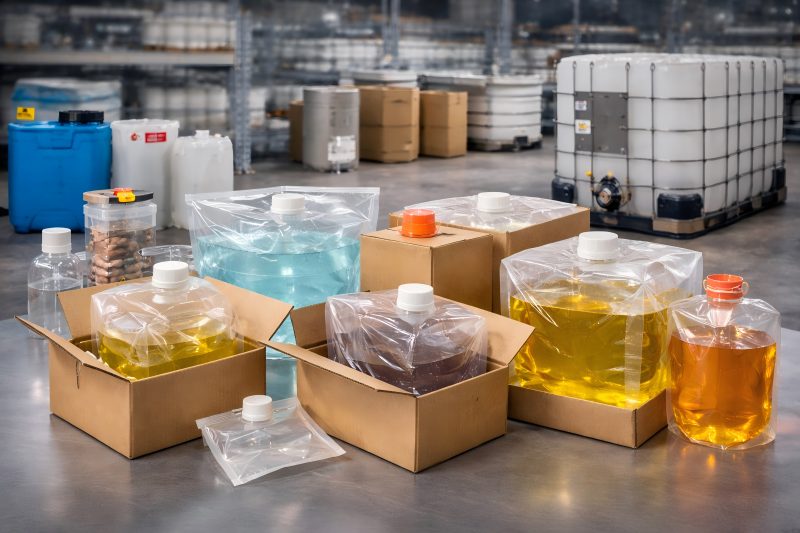
Among today’s liquid packaging options, cubitainers fill a distinct middle ground between small containers and bulk systems. This article explains where cubitainers fit within industrial liquid packaging, supported by comparisons, use cases, and decision tables.
Overview of Industrial Liquid Packaging Solutions
Industrial liquid packaging can be broadly categorized by volume, handling method, and application environment. Selecting the correct packaging format impacts logistics efficiency, workplace safety, product integrity, and total cost of ownership.
Common Industrial Liquid Packaging Formats
- Small containers (bottles, jerry cans)
- Cubitainers
- Drums (plastic or steel)
- Intermediate Bulk Containers (IBCs)
- Bulk tanks and tankers
Each format serves a different operational purpose, and no single solution fits all industrial needs.
Table 1: Comparison of Major Industrial Liquid Packaging Formats
| Packaging Type | Typical Capacity | Handling Method | Key Advantages | Key Limitations |
| Bottles | 0.5–5 L | Manual | Precise dosing, retail-ready | Inefficient for industrial volumes |
| Jerry Cans | 5–25 L | Manual | Portable, low-cost | Poor stacking efficiency |
| Cubitainers | 5–30 L | Manual / Semi-manual | Space-efficient, ergonomic | Limited for bulk automation |
| Drums | 50–220 L | Forklift / Manual | Industry standard, robust | Heavy, space-inefficient |
| IBCs | 500–1,000 L | Forklift | High volume, reusable | High upfront cost |
| Bulk Tanks | >1,000 L | Pump systems | Lowest unit cost | No portability |
What Are Cubitainers and Why Are They Different?
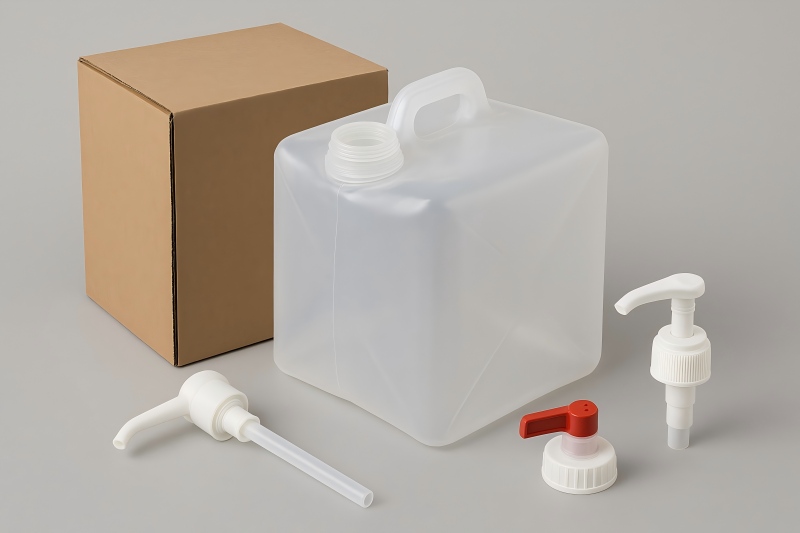
Cubitainers are rectangular or box-shaped containers, typically made from high-density polyethylene (HDPE). They usually feature an integrated handle and a screw cap or dispensing spout. Their defining characteristic is shape efficiency, which allows them to maximize space utilization during storage and transport.
Key Structural Characteristics
- Rectangular geometry
- Lightweight HDPE construction
- Stackable design
- Integrated pouring or dispensing system
Cubitainers are commonly used in industrial, agricultural, chemical, and food-processing sectors, especially where medium-volume liquid handling is required.
Where Cubitainers Fit Best in Industrial Packaging
Cubitainers are not a replacement for drums or IBCs. Instead, they excel in specific operational scenarios where other formats fall short.
Medium-Volume Industrial Liquids
Cubitainers are ideal for liquids that are:
- Too large for bottles or jerry cans
- Too small to justify drums or IBCs
This includes specialty chemicals, additives, formulations, and process fluids.
Decentralized or On-Site Operations
Industries with multiple production lines or satellite facilities benefit from cubitainers because they are:
- Easy to transport internally
- Simple to store near points of use
- Safer for manual handling than drums
Applications Requiring Frequent Dispensing
Cubitainers with spouts or valves are well-suited for operations requiring:
- Controlled pouring
- Partial use over time
- Reduced exposure during dispensing
Industrial Applications Where Cubitainers Perform Best
| Industry | Typical Liquids | Why Cubitainers Are Suitable |
| Chemicals | Additives, reagents, surfactants | Chemical resistance, controlled dispensing |
| Agrochemicals | Pesticides, liquid fertilizers | Easy handling, space efficiency |
| Food Processing | Syrups, flavorings, oils | Cleanability, portion control |
| Lubricants | Specialty oils, greases | Reduced spillage, easy pouring |
| Coatings & Inks | Resins, colorants | Stackability, batch handling |
| Water Treatment | Treatment chemicals | Safe storage, moderate volumes |
Operational Advantages of Cubitainers
Space and Logistics Efficiency
Rectangular cubitainers significantly improve:
- Pallet utilization
- Warehouse density
- Transport cost per liter
Compared to round containers, cubitainers reduce unused void space during stacking.
Ergonomics and Workplace Safety
Cubitainers are lighter and easier to grip, reducing:
- Worker fatigue
- Risk of lifting injuries
- Accidental spills during pouring
This is particularly advantageous for facilities with limited mechanical handling resources.
Cost Control and Efficiency
Cubitainers often provide a lower total cost of ownership for medium-volume liquids due to:
- Lower material costs than drums
- Reduced transport inefficiency
- Minimal need for auxiliary handling equipment
Cubitainers vs. Drums vs. IBCs: A Practical Decision Guide
Selecting the right packaging format depends on more than just volume. Handling frequency, available storage space, and regulatory requirements all influence the outcome.
When to Choose Cubitainers Over Other Formats
| Decision Factor | Cubitainers | Drums | IBCs |
| Volume per SKU | Medium | Medium–High | High |
| Manual Handling | Excellent | Limited | Poor |
| Space Efficiency | High | Low | Medium |
| Initial Cost | Low | Medium | High |
| Reusability | Limited / Conditional | Moderate | High |
| Automation Compatibility | Moderate | High | High |
Cubitainers are best chosen when flexibility, ergonomics, and space efficiency outweigh the need for bulk automation.
Regulatory and Material Considerations
Material Compatibility
Most cubitainers are made from HDPE, offering resistance to:
- Acids and alkalis
- Water-based solutions
- Many industrial chemicals
However, compatibility must always be verified for:
- Solvents
- Highly aromatic or oxidizing chemicals
Compliance and Certification
Cubitainers used in industrial supply chains may need to comply with:
- UN packaging standards (for hazardous liquids)
- Food-contact regulations (for food ingredients)
- Workplace safety and transport regulations
Sustainability and Environmental Impact
Sustainability is becoming a key driver in packaging decisions. Cubitainers offer several environmental advantages when managed correctly.
Sustainability Benefits
- Lightweight → lower transport emissions
- Single-material construction → easier recycling
- Reduced packaging waste compared with using multiple small containers.
| Aspect | Cubitainers | Drums | IBCs |
| Material Efficiency | High | Medium | Medium |
| Transport Emissions | Low | High | Medium |
| Recycling Simplicity | High | Medium | Medium |
| Reuse Potential | Moderate | Moderate | High |
| Waste Reduction | High (vs bottles) | Medium | High |
Limitations of Cubitainers
Despite their advantages, cubitainers are not suitable for every scenario.
Key Limitations
Not ideal for fully automated high-volume filling lines
Lower durability compared with steel drums
Not suitable for long-term storage of certain aggressive chemicals
Reuse may be restricted by regulations or contamination risk
Understanding these limits ensures cubitainers are used where they add value, not where they create constraints.
Future Trends in Cubitainer-Based Packaging
Innovation in industrial packaging continues to evolve, with cubitainers adapting to new demands.
Emerging Trends
- Recycled-content HDPE cubitainers
- Improved dispensing valves and closures
- Smart labeling and traceability features
- Integration with refill and closed-loop systems
These developments further strengthen the role of cubitainers in modern industrial supply chains.
Industrial liquid packaging is no longer a one-size-fits-all decision. As operations diversify and efficiency expectations rise, companies must deploy multiple packaging formats strategically.
Cubitainers occupy a critical middle ground:
- More efficient than small containers
- More flexible than drums
- More economical than IBCs for medium volumes
When selected for the right applications—medium-volume liquids, decentralized operations, frequent dispensing, and space-constrained environments—cubitainers deliver measurable gains in efficiency, safety, and cost control.
Used correctly, they are not just containers, but enablers of smarter industrial liquid management.