
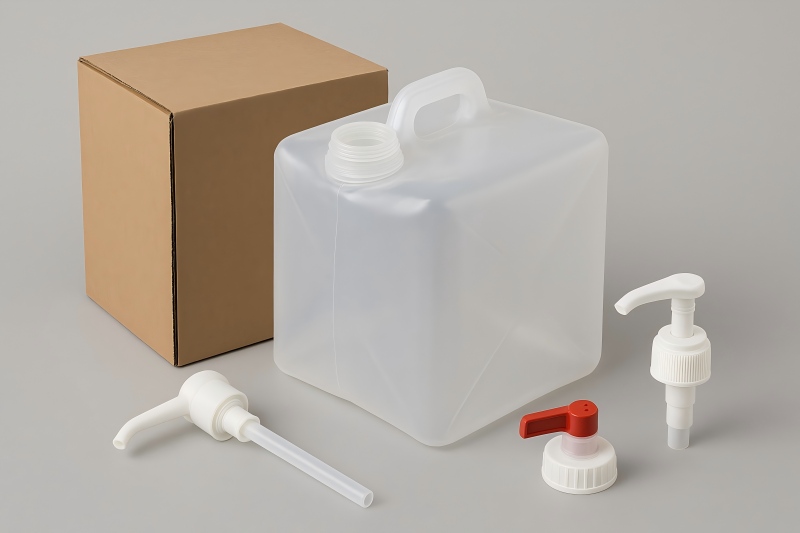
Industries like chemical processing and food and beverage face logistical and cost challenges in storing and transporting large volumes of liquids. While traditional steel drums and rigid plastic containers have been the norm, cubitainers — flexible, collapsible containers — have emerged as a highly effective alternative.
Space Efficiency and Storage Optimization
One of the most compelling reasons companies choose cubitainers is their space‐saving capabilities.
Advantages in Space Utilization
- Flat storage when empty: Unlike drums or totes, cubitainers collapse completely when emptied, drastically reducing storage space requirements.
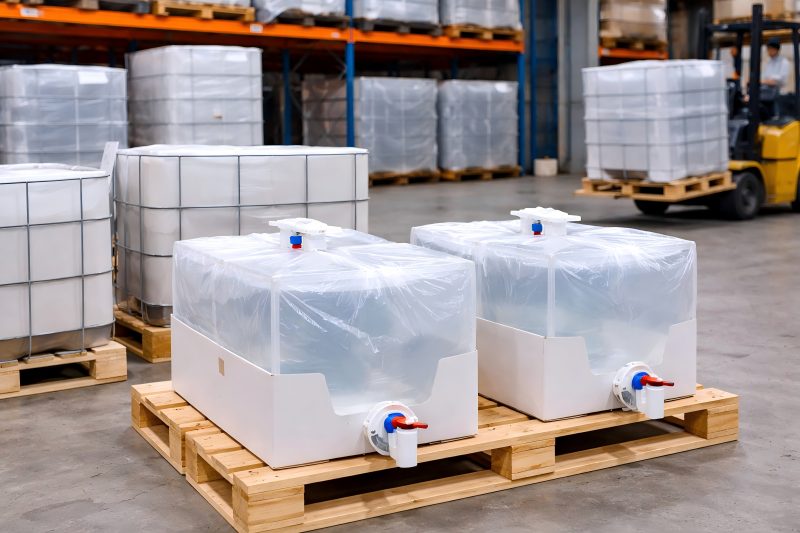
- Efficient stacking and racking: Filled cubitainers can be stacked efficiently, often allowing tighter packing in warehouses or shipping containers.
- Better use of truck/container volume: More liquid can fit in a standard shipping container because cubitainers are shaped to maximize space.
Space Comparison of Liquid Containers
| Container Type | Empty Storage Space Used | Filled Volume Efficiency | Stackability |
| Steel Drum (200 L) | High | Moderate | Limited |
| Rigid Plastic IBC (1000 L) | Moderate | High | Good |
| Cubitainer (100–1000 L) | Very Low | Very High | Excellent |
👉 As shown above, cubitainers offer a unique blend of low empty storage requirements and high filled volume efficiency — a key advantage for facilities with limited space or high throughput.
Reduced Transportation Costs
Transport costs are a major expense in the supply chain for liquids. Cubitainers deliver significant cost savings in this area due to their design.
Key Transportation Advantages
- Higher payload per vehicle: Because cubitainers fit more liquid into a given truck/trailer, fewer trips may be needed.
- Lower tare weight: The container itself weighs less than traditional drums or rigid IBCs, which means more of the vehicle’s weight capacity can be allocated to the product rather than packaging.
- Reduced shipping volume: Collapsible nature allows shipping of empty units in a compact form, lowering inbound logistics costs.
Transportation Economics
| Metric | Drum (200 L) | Rigid IBC (1000 L) | Cubitainer (1000 L) |
| Container Weight (kg) | 22 | 60 | 15 |
| Payload Efficiency | 85% | 90% | 95% |
| Required Trips (10000 L) | 50 | 10 | 10 or fewer |
| Shipping Cost per L (Est) | High | Medium | Low |
This table illustrates that while rigid IBCs are already more efficient than drums, cubitainers push that efficiency further through reduced container weight and better volumetric utilization.
Ease of Handling and Operational Flexibility
Operational efficiency in warehouses and during production matters. Cubitainers streamline many of the steps involved in handling bulk liquids.
Operational Benefits
- Simpler filling and emptying: Cubitainers often come with pre installed valves, spouts, or fittings that make loading and dispensing straightforward.
- No need for pumps for full drainage: Many cubitainer designs allow nearly complete emptying by gravity, reducing the need for additional pumping equipment.
- Ergonomic handling: Workers can handle cubitainers more easily than heavy rigid containers, improving workplace safety.
Operational Features
| Feature | Drum | Rigid IBC | Cubitainer |
| Easy Fill/Dispense | Moderate | Good | Excellent |
| Need for Pumping Equipment | Often | Sometimes | Rarely |
| Ergonomic for Workers | Poor | Moderate | Good |
| Reusability Potential | Moderate | Good | Very Good |
Note: Cubitainers designed with quick connect valves improve process flows in production environments.
Improved Hygiene and Reduced Contamination Risk
Contamination concerns are important factors in industries like food and beverage and pharmaceuticals.
Hygiene Benefits
- Single-use options: Many cubitainers are designed as single-use liners, eliminating cross-contamination between batches.
- Barrier films: High-quality cubitainers can include multilayer barrier films that protect liquids from oxygen, moisture, and light.
- Clean filling environment: Cubitainers reduce the need for repeated cleaning of rigid tanks and barrels.
Contamination Risk Factors
| Risk Factor | Drum | Rigid IBC | Cubitainer |
| Cross-Batch Contamination | Moderate | Moderate | Low |
| Cleaning Requirements | High | Moderate | Low |
| Barrier Protection Availability | Limited | Varies | High |
| Suitable for Food/Pharma | Conditional | Conditional | Highly Suitable |
In industries where even trace contamination can be costly or dangerous, cubitainers provide peace of mind and enhanced quality control.
Cost Savings Across the Lifecycle
Cost is always at the top of decision making criteria. While cubitainers sometimes carry a higher unit price than a single drum, their lifecycle costs — especially for reusable designs — are significantly lower.
Cost Advantages
- Lower warehousing costs: Less space needed for empty storage.
- Reduced handling labor: Easier movement and setup reduce labor time.
- Minimized downtime: Faster changeovers and fewer cleaning requirements speed production cycles.
- Reusability: Certain durable cubitainers can be cleaned and reused multiple times.
Typical Lifecycle Cost Comparison
| Cost Category | Drum | Rigid IBC | Cubitainer |
| Purchase Cost per Unit | Low | High | Medium |
| Cleaning & Maintenance | High | Medium | Low |
| Storage Expense (Empty) | High | Medium | Very Low |
| Lifecycle Cost per 1000 L | High | Medium | Low |
Ultimately, the total cost of ownership — or TCO — for cubitainer systems often undercuts traditional packaging when evaluated across these factors.
Customization and Industry Adaptability
Cubitainers are not one-size-fits-all; they can be designed with features specific to industry needs.
Custom Features
- UV protection for light-sensitive liquids
- Layers engineered for an oxygen or moisture barrier
- Specialized valve options (e.g., sanitary fittings for food)
- Size variants from 10 L to 1000+ L
- Reinforced designs for hazardous chemicals
Industry Suitability at a Glance
| Industry | Conditions | Cubitainer Suitability |
| Chemicals | Corrosive, Hazardous, reactive | Very High |
| Food & Beverage | Sanitary, contamination free | Very High |
| Pharmaceuticals | Sterile, high purity | Very High |
| Agriculture | Fertilizers, pesticides | High |
| Industrial Oils & Lubricants | Heavy liquids, large volume | High |
This versatility makes cubitainers appealing to a wide range of sectors with differing regulatory and handling requirements.
Environmental Advantages
In an era where sustainability matters, cubitainers offer several environmental benefits, especially when compared to single use drums or other rigid containers.
Eco-Friendly Attributes
- Less plastic per liter stored: Compared with rigid containers, cubitainers use significantly less raw plastic per unit of volume stored.
- Reduced carbon footprint in transportation: Less fuel is used when there are more payloads and fewer trips.
- Recyclability: In areas with facilities, a lot of liner materials can be recycled.
- Reduced waste: Collapsible design means less landfill space for empty packaging.
Environmental Impact Factors
| Impact Factor | Drum | Rigid IBC | Cubitainer |
| Material Use per L | High | Medium | Low |
| Carbon Emissions (Transport) | High | Medium | Low |
| End of Life Recycling | Varies | Good | Good |
| Waste Volume (Empty) | High | Medium | Very Low |
Organizations committed to sustainability often find cubitainers meet both operational goals and environmental standards.
Cubitainers offer an efficient solution for bulk liquid storage and transportation, providing space savings, lower costs, enhanced hygiene, flexibility, and environmental benefits. While traditional drums and IBCs still have their uses, cubitainers are becoming increasingly attractive across industries.
They ensure sanitary handling for food, robust protection for chemicals, and optimized logistics for industrial liquids, delivering value throughout the supply chain. For organizations seeking efficiency and cost savings, cubitainers offer a strong return on investment and a modern approach to liquid management.