
As climate concerns intensify, packaging’s carbon footprint has become a critical focus. This article compares bag-in-box packaging with rigid alternatives, explaining why BiB often delivers lower emissions for liquid products and where trade-offs remain.
Understanding Carbon Footprint and Packaging
The carbon footprint of a packaging system refers to the total greenhouse gas emissions — usually expressed in kilograms or grams of CO₂-equivalent (CO₂e) — generated over its entire life cycle. This includes raw material extraction, manufacturing, transportation, use, and end-of-life (recycling or disposal). The dominant assessment method is Life Cycle Assessment (LCA), an ISO-standardized approach that quantifies environmental impacts across stages of a product’s life.
LCA enables comparisons that go beyond intuition: lightweight packaging materials may require fewer inputs and generate fewer emissions in transport, yet they might involve complex recycling streams or degrade differently at the end of life. Therefore, it’s important to evaluate functional units — for instance, the CO₂e per liter of liquid packaged — rather than simply comparing the weight or volume of containers.
What Is Bag-in-Box Packaging?
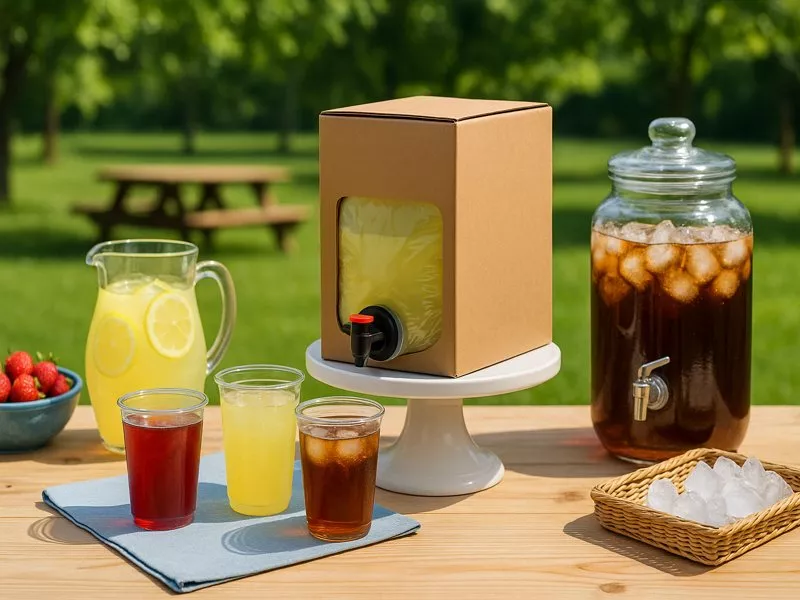
Bag-in-box packaging consists of a flexible inner bag — typically multi-layered plastic films — seated inside a protective outer carton of corrugated fiberboard. A tap or spout allows liquid to be dispensed without exposing the remaining contents to air. This design is widely embraced in wine, juice, dairy, edible oils, and industrial chemicals.
The BiB system leverages two main elements to reduce environmental impacts:
- Lightweight materials: Most of the packaging’s volume is air until filled, and the inner bag is comparatively thin.
- Space-efficient geometry: Rectangular boxes stack well for transport and storage, reducing dead space and maximizing payload.
Both characteristics are central to decreased carbon emissions relative to heavier or less space-efficient packaging.
Carbon Footprint Advantages of Bag-in-Box
Lower Material Inputs
Compared to rigid packaging — especially glass bottles — BiB uses far less material per liter of product. In one comparative analysis, bag-in-box packaging had up to 8-fold lower carbon footprint than 75 cl glass bottles.
This stems from two factors:
- Material weight: For equivalent volume, BiB materials weigh far less than glass or metal containers.
- High cardboard share: More than 75 % of a typical 3 L BiB package is corrugated cardboard — renewable, recyclable, and often recycled at high rates — while only about 25 % is plastic.
Because producing material — especially glass — is energy-intensive, lighter packaging directly reduces emissions from the cradle-to-gate stages (raw material extraction and manufacturing).
Reduced Transport and Logistics Emissions
Packaging weight and shape have a direct influence on transportation emissions:
- Heavier containers require more fuel: A cargo of glass bottles is heavier and bulkier per liter than the same volume in bag-in-box, raising fuel use in road, rail, or sea shipments.
- Efficient palletization: BiB’s rectangular form improves space utilization, often allowing more product per truck or container.
One estimate suggests that one truckload of 5 L BiB packs could replace more than seven truckloads of traditional wine bottles — dramatically reducing transport-related emissions.
Better Shelf and Storage Performance
Because BiB collapses as contents are dispensed, it minimizes wasted space in both storage and retail settings. Additionally, BiB extends shelf life after opening — especially for wine — reducing food waste. This is significant because most carbon emissions in food systems come from the food itself rather than the packaging.
Lower Communal Waste Footprint
Since BiB’s cardboard can be easily separated and recycled, and because the plastic material is light, the total waste generated per unit of product is substantially lower. Allied with high recycling rates for cardboard (e.g., ~85 % in Europe), this contributes to a smaller net carbon footprint overall.
Comparisons With Other Packaging Types
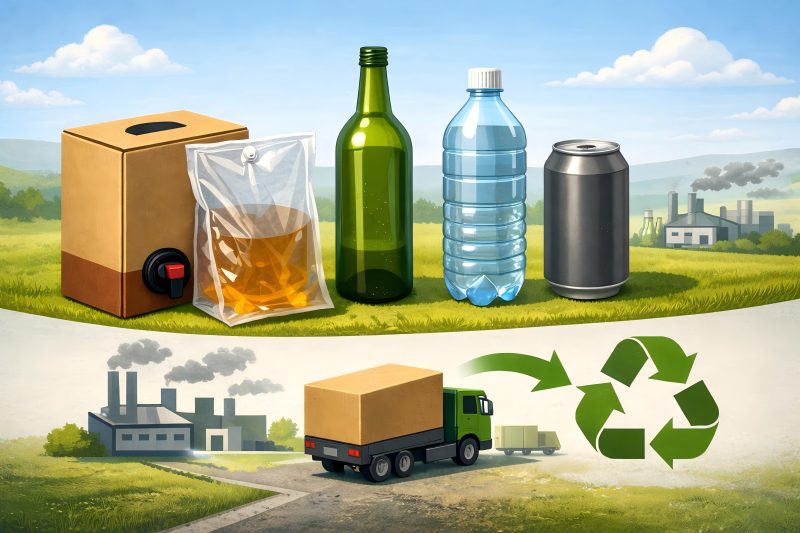
BiB vs Glass Bottles
Glass has long been considered a premium and inert packaging material, widely used in beverages like wine and spirits. However, its climate performance shows important limitations:
- High production emissions: Glassmaking requires very high temperatures and significant energy inputs.
- Heavy transport: Glass is dense, increasing transport emissions per unit of liquid.
- Recycling limitations: While glass is technically recyclable indefinitely, not all collected glass is remelted; much is downcycled or used in secondary products.
Empirical comparisons reveal that:
BiB packaging may have up to 8 times lower carbon footprint than standard glass bottles of the same product.
In specific wine packaging studies, replacing glass with BiB reduced GHG emissions by around 48 % to 80 % depending on the scenario.
These numbers underscore how fundamentally different material, form, and logistics factors influence total CO₂e.
BiB vs Plastic Bottles (PET)
Plastic bottles — especially PET — are lightweight and often cited for their low transport emissions. However, plastic alternatives come with trade-offs:
- PET bottles require petroleum feedstocks, contributing to fossil fuel emissions and extraction-related impacts.
- Recycling rates for PET vary widely and are often lower than for paper or cardboard.
The balance between lightweight benefits and fossil carbon intensity means that, in some studies, BiB performs equally or better than plastic bottles on a per-functional-unit CO₂e basis — especially when factoring end-of-life and recycling infrastructure.
BiB vs Metal Cans and Kegs
Metal containers (aluminum cans, steel kegs) can excel in some areas, such as ease of recycling and reuse (kegs). However:
- Cans still require smelting and forming processes that are energy-intensive.
- Kegs are heavier and primarily suitable for bulk dispensing rather than consumer retail.
Comparative data suggests that while cans and kegs can compete in certain contexts, BiB often remains favorable for packaged liquids consumed over time due to its low material and transport footprint — though the precise ranking depends on product volume and usage patterns.
Beyond Carbon: Other Environmental Considerations
Carbon footprint is a vital metric, but it’s one part of environmental sustainability. Other factors include:
Water and Energy Use
Compared with rigid packaging, BiB production typically consumes lower water and energy resources, adding to its broader sustainability profile.
Food Waste Reduction
Because BiB packaging preserves contents longer (especially after opening), it reduces food waste, which itself carries embedded carbon emissions from agriculture, processing, and distribution. Reducing food waste is a critical lever for lowering total supply chain emissions.
Recycling Infrastructure
The environmental advantage of BiB depends on local recycling capabilities. Cardboard recycling is well-developed in many regions, but the multi-layer plastic bag may face barriers to recycling in some areas. Efficient separation and recycling systems enhance BiB’s net benefit.
Challenges and Limitations
BiB packaging is not without challenges:
- Perception: Especially in products like wine, consumer perceptions of quality are evolving, but some still prefer traditional bottles.
- Recycling complexity: The plastic inner bag may not be accepted by all recycling streams, limiting the realized environmental benefits if not properly separated.
- Material performance: For certain products requiring long-term shelf life (e.g., aged spirits), BiB may not be suitable.
Implications for Manufacturers and Brands
Given the compelling carbon footprint advantages, companies should consider:
- Life Cycle Assessment Integration: Conduct LCAs for specific products and regions to quantify where BiB adoption yields the greatest benefits.
- Design For Recycling: Optimize BiB materials for easier separation and integration with local recycling systems.
- Consumer Education: Communicate environmental benefits and proper disposal to maximize both market acceptance and sustainability impact.
Bag-in-box packaging consistently shows a much lower carbon footprint than rigid formats—especially glass—often cutting emissions by up to 80%. With efficient design and recycling, BiB is among the most carbon-efficient packaging solutions available today.